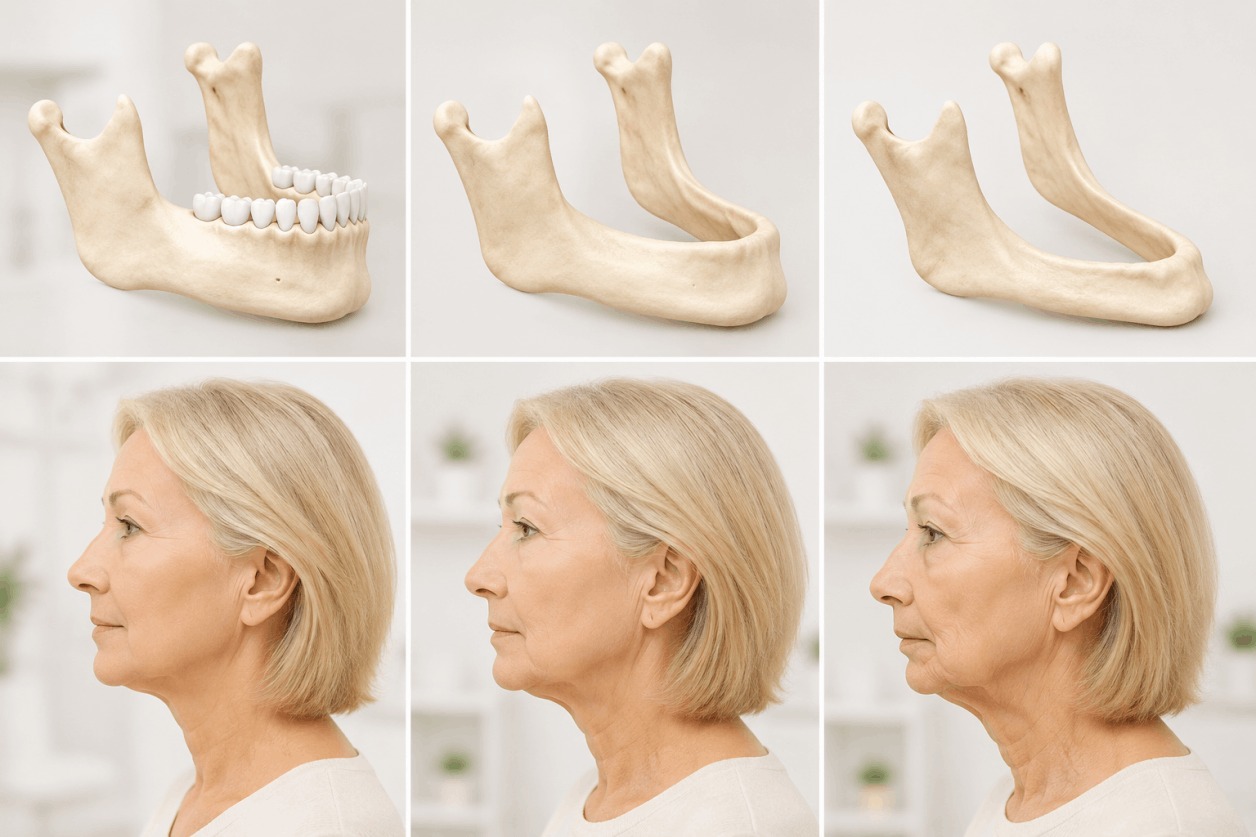
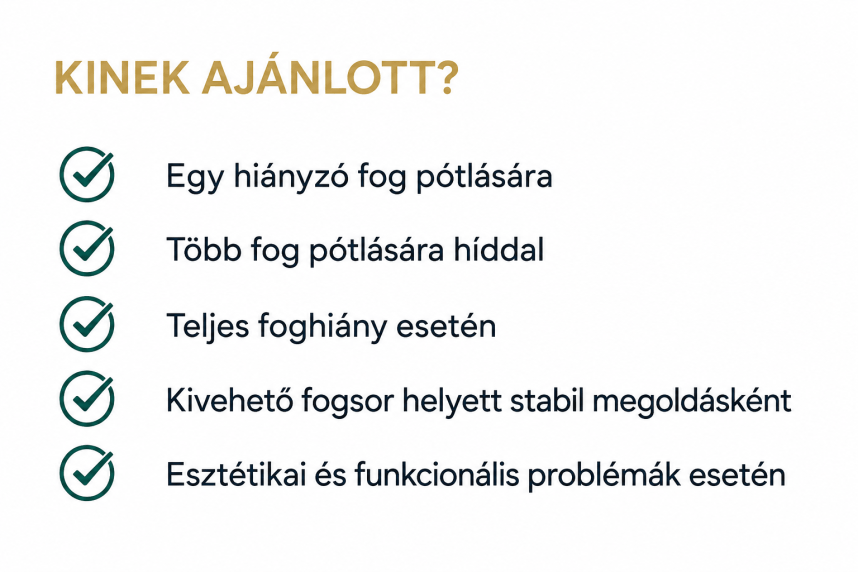
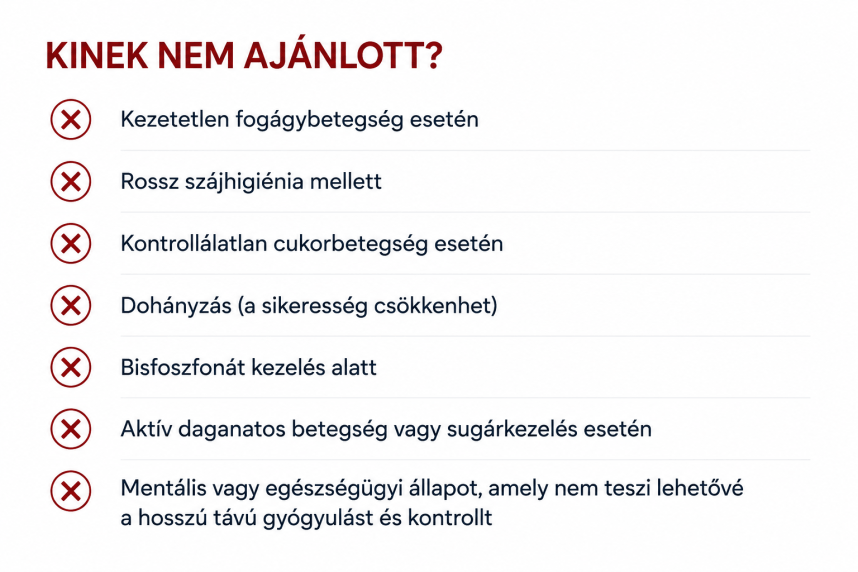
Complete tooth loss or severely damaged, non-restorable teeth can have a major impact on quality of life. Chewing becomes difficult, speech may deteriorate, facial support changes and the jawbone gradually resorbs, while many patients lose confidence and smile less often. Modern implantology can now solve these problems with a comprehensive long-term treatment approach.
Full mouth rehabilitation is not only about replacing missing teeth. It also restores the bite, chewing function, jaw joint balance and natural facial support. Our aim is not simply to make new teeth, but to create a stable, aesthetic and predictable smile for the long term.
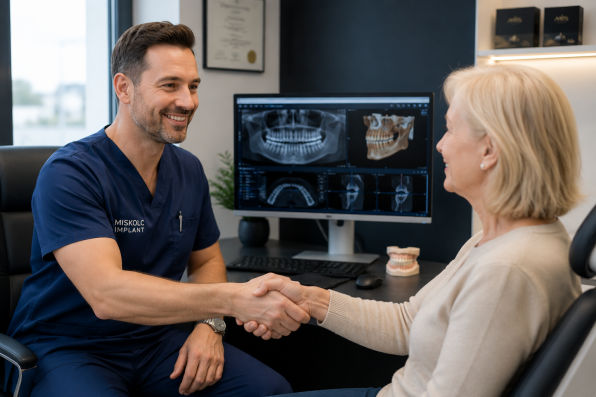
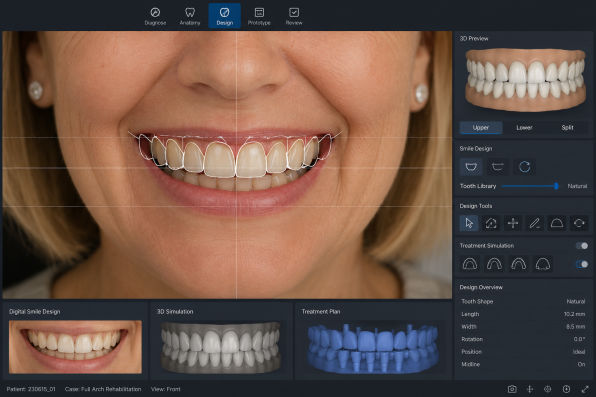
Every treatment starts with a detailed consultation and a 3D CBCT scan. Digital diagnostics provide an accurate view of bone quantity and quality, the location of nerves and the sinus, and the anatomy of the jaw. The treatment plan is always preceded by digital smile design.
Our implant philosophy is based on backward planning. This means that the final tooth position determines the implant position, not the other way around. First we design the ideal final restoration, then plan the exact implant positions accordingly. This helps achieve an optimal aesthetic, functional and biomechanical result.
Depending on the amount of available bone, several treatment options are possible. With sufficient bone, conventional implants provide a stable foundation for the final restoration. In more advanced bone loss, bone grafting or sinus lift may be needed, but in certain anatomical situations these procedures can often be avoided with special implant techniques.
Our clinic offers a wide range of modern implant solutions, including tilted implants, pterygoid implants and, where indicated, zygomatic implants. These techniques can make fixed teeth possible for many patients who were previously offered only removable dentures.
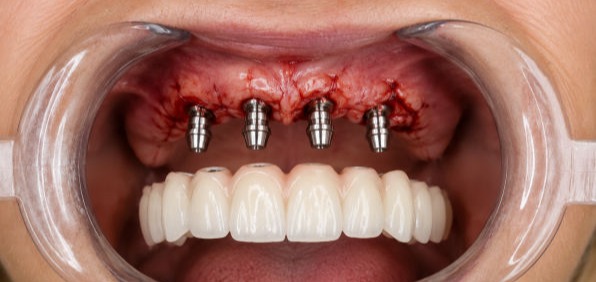
If primary stability is adequate, immediate implantation and immediate loading may also be possible. In these cases implants are placed at the time of tooth removal and a fixed temporary restoration can be made on the day of surgery or within a few days. Our goal is that patients do not have to remain without teeth whenever possible and can spend the healing period with confidence.
The final restoration is a premium screw-retained zirconia or metal-reinforced full-arch prosthesis that provides a natural appearance, excellent chewing function and long-term stability. A fixed implant-supported restoration does not move during speech or eating, requires no adhesive and feels closer to natural teeth.
Restoring proper chewing is not only a matter of comfort. Thorough chewing can support digestion, reduce stomach and digestive complaints, contribute to a balanced diet and make it possible to enjoy a varied, fibre-rich diet again. Restoring a full dentition can also improve general health and quality of life.
Our treatments follow the Slow Dentistry philosophy. For us, speed is not the priority; precision, safety and predictable results are. We perform procedures with proper time allocation, magnification and modern digital technologies to achieve the best possible long-term outcome.
With full mouth rehabilitation we do more than make new teeth. We restore a confident smile, secure chewing, relaxed conversations and the quality of life that stable, natural-feeling teeth provide. It is a long-term investment in health, confidence and everyday comfort.